Skip to content
SGTN

Scholar Feature — 03

The Choreography You Only See If You Stay Still

David Seamon studies the part of place that resists the itinerary entirely: the unremarkable, repeated, bodily routine of ordinary life in one location.

Phenomenology of Place & The Lifeworld

Seamon’s attention goes where travel writing rarely does: to habit. Not the festival but the Tuesday. Not the landmark but the route people take past it without looking up.

His argument is that place is produced by bodies repeating themselves — and that this choreography is invisible to anyone moving fast. The only instrument that detects it is a traveller willing to stay in one spot long enough to become part of the background.

Place-ballet is a fusion of body and time-space routines rooted in a particular environment.
David Seamon, A Geography of the Lifeworld

Core Framework

Three Layers of Lived Place

Seamon’s phenomenology moves from the individual habit outward to the shared rhythm and, finally, to belonging.

  • 01

    The Lifeworld

    Everyday habits & routines

    The taken-for-granted texture of daily life — the pre-reflective world you move through without deciding to. It is invisible to those inside it and, handled carelessly, invisible to visitors too.

    What is so ordinary here that nobody would think to mention it?

  • 02

    Place-Ballet

    The synchronised choreography of street life

    When many individual routines interlock in one location at one hour, they compose something like a performance nobody rehearsed: shutters, deliveries, greetings, the same three people at the same corner. It is the most reliable sign of a functioning place.

    What repeats here, and at what hour?

  • 03

    At-Homeness

    Sensory belonging & familiarity

    The felt sense of being held by a place — knowing where things are, what sounds mean, which door sticks. Travellers can never manufacture it, but they can learn to recognise it in others, and to avoid trampling it.

    Who is at home here, and what does my presence cost them?

Case Studies

Field Notes

Three encounters recorded by staying put — the observational method Seamon’s work demands.

  • A village intersection at sunrise: a baker carrying a tray of bread, a woman sweeping her doorstep, and a man opening his shutters
    Greece

    Case Study A

    The Place-Ballet

    A village intersection at sunrise, where roughly forty minutes of unrehearsed daily choreography plays out on schedule.

    Bread first, then the shutters, then the two men who take the same bench in the same order, then the dog who belongs to no one and is fed by everyone. Nobody in it would describe it as remarkable. Sit through it twice and the pattern becomes as legible as sheet music.

    Place-Ballet

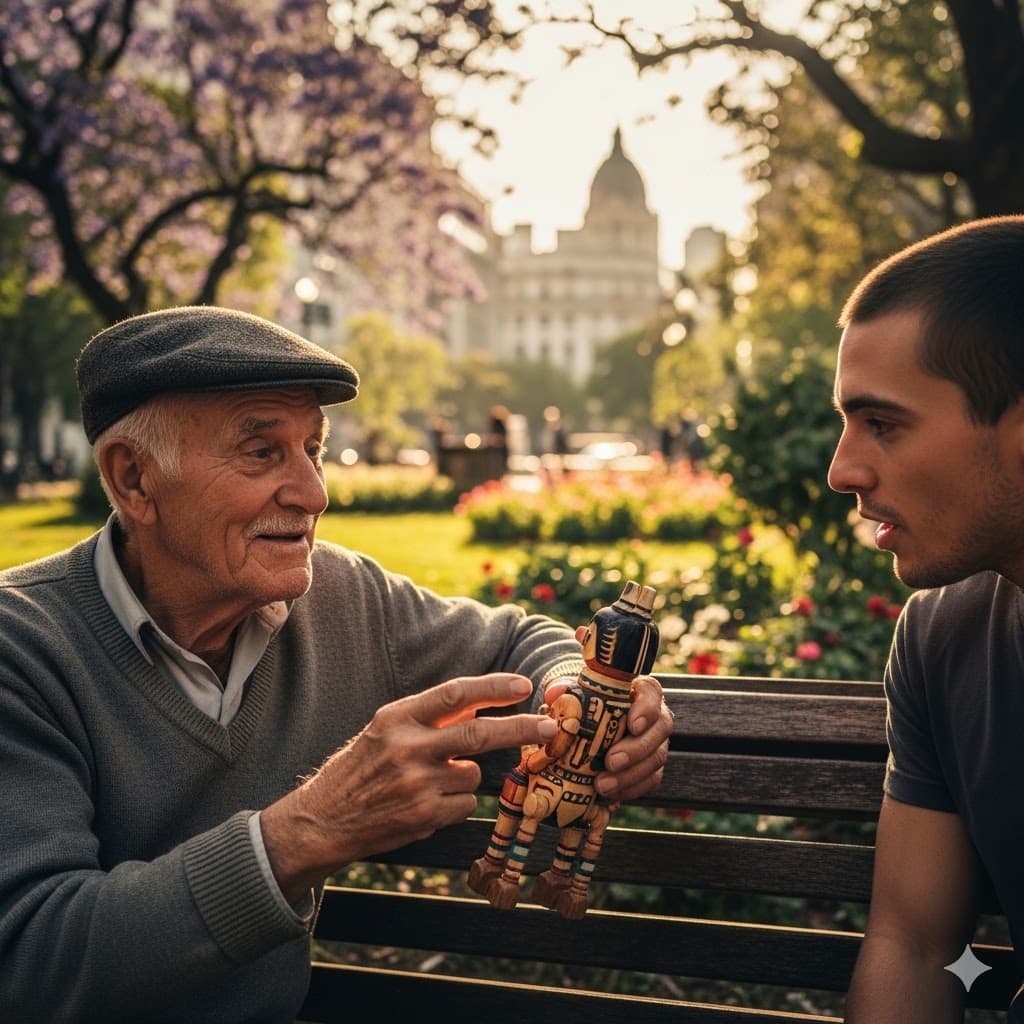
  • An older man on a park bench in Buenos Aires showing a small carved figure to a younger man, jacaranda in blossom behind them
    Buenos Aires

    Case Study B

    The Living Room of the City

    A park bench conversation that reveals the park is not public space at all — it is domestic space with better light.

    She had used the same bench for eleven years, and described the park the way most people describe a hallway: functionally, with irritation about the parts that had been changed. The park was not scenery she visited. It was a room she lived in, shared with several thousand co-tenants.

    The Lifeworld

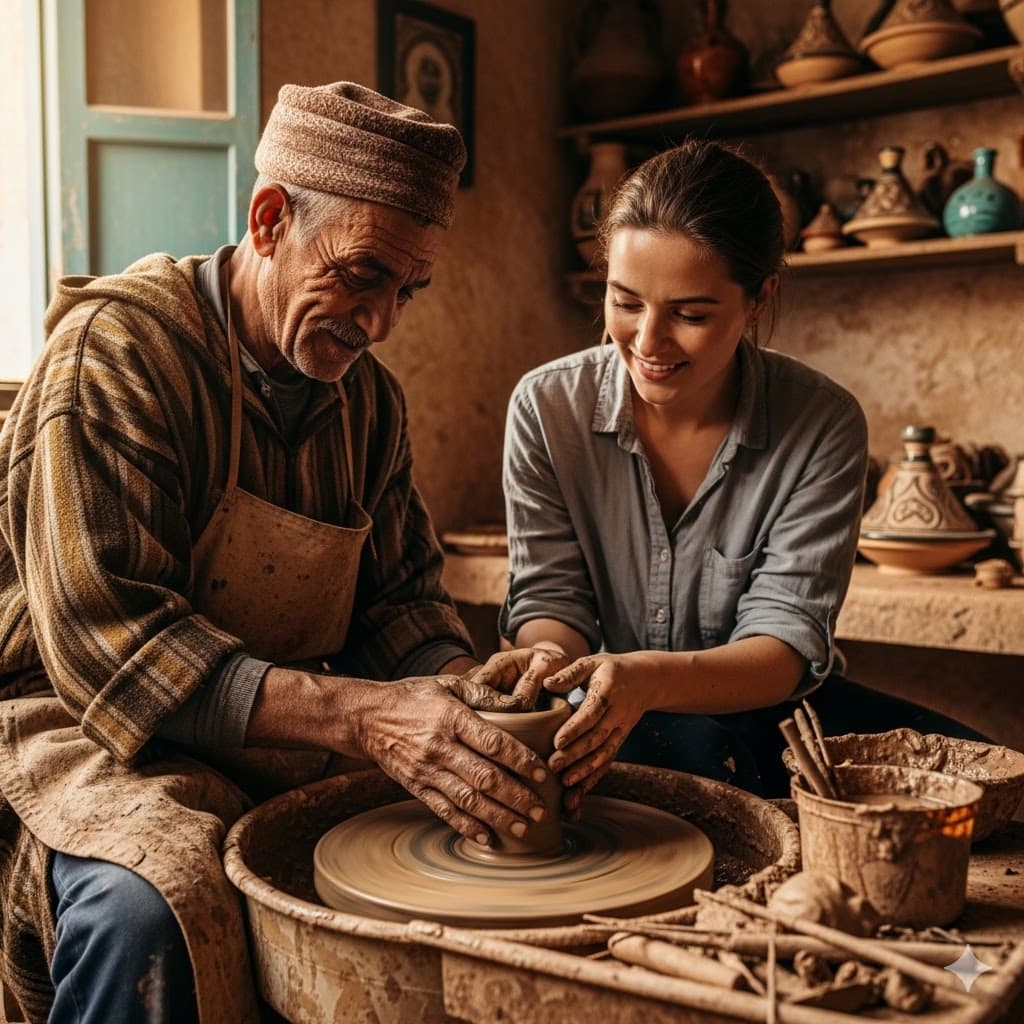
  • A Moroccan potter guiding a visitor’s hands on a spinning wheel in his studio, finished vessels on the shelves behind
    Morocco

    Case Study C

    Sensory Wisdom

    A potter’s studio where the crucial knowledge is held in the hands and cannot be transferred by watching.

    He judged the clay by sound and the kiln by smell, and had no vocabulary for either because none was ever needed. When he put my hands on the wheel it was not a demonstration; it was the only available transmission method. At-homeness, Seamon argues, is exactly this — knowledge that lives in the body and in one specific room.

    At-Homeness

Further Reading

Selected work

  • A Geography of the Lifeworld1979St. Martin’s Press
  • Life Takes Place: Phenomenology, Lifeworlds, and Place Making2018Routledge
  • Dwelling, Place and Environment1985Martinus Nijhoff

SGTN scholar features are editorial tributes. They summarise and apply published work by David Seamon; they are not authored or endorsed by the scholar.

Your Turn

Every Framework Started as Somebody’s Field Note.

Record one encounter in 100–300 words and send it to the network. The scholarship on this page exists because people paid attention and wrote it down.