Skip to content
SGTN

Scholar Feature — 02

No Place Is an Island. It Never Was.

Doreen Massey dismantled the idea that authentic places are sealed, timeless and local — and replaced it with something far more useful to the honest traveller.

A Global Sense of Place & Power-Geometry

The travel industry sells authenticity as isolation: the untouched village, the place time forgot. Massey’s work makes that promise not just false but backwards. Places have never been sealed containers. They are knots in a web of relations that stretch far beyond their edges.

Her question was never “what makes this place separate?” but “what set of connections meets here, and on whose terms?” It is a question that survives contact with a real street in a way that authenticity-hunting does not.

What gives a place its specificity is not some long internalised history but the fact that it is constructed out of a particular constellation of relations.
Doreen Massey, A Global Sense of Place

Core Framework

Reading a Place as a Process

Massey’s framework replaces the sealed, static place with a live one — constantly remade, unevenly experienced.

  • 01

    Places as Processes

    Constantly recreated by connections

    A place is not a noun sitting still; it is a verb in progress. Every arrival, trade route, migration and departure recomposes it. The village that “never changes” is being actively remade every day, usually by hands nobody photographs.

    What is being made here right now, and by whom?

  • 02

    A Global Sense of Place

    Local spots as global meeting points

    Local does not mean isolated. A single market stall can be the meeting point of a dozen geographies — supply chains, diasporas, currencies, colonial histories. Specificity comes from which threads meet here, not from the absence of threads.

    Which elsewheres are present in this room?

  • 03

    Power-Geometry

    Unequal relationships to mobility

    Everyone is inside the same global flows, but not on the same terms. Some initiate movement; some are moved; some are pinned in place by it. The traveller and the person serving the traveller are in radically different positions within one shared geography.

    Who here is in charge of the movement, and who is subject to it?

Case Studies

Field Notes

Three encounters in which the wider world turned out to be standing inside a very small room.

  • A saffron merchant’s stall in the Grand Bazaar, Istanbul, with spices in open sacks
    Istanbul

    Case Study A

    The Global Threads

    A saffron merchant in the Grand Bazaar, and a stall that turns out to be a switchboard for half a continent.

    He sold saffron from three countries and could tell you the rainfall in each. His stock moved on routes older than the building; his prices moved on a currency app refreshed every few minutes. Nothing about the stall was sealed off from the world — the stall *was* the world, arriving in a space two metres wide.

    Global Sense of Place

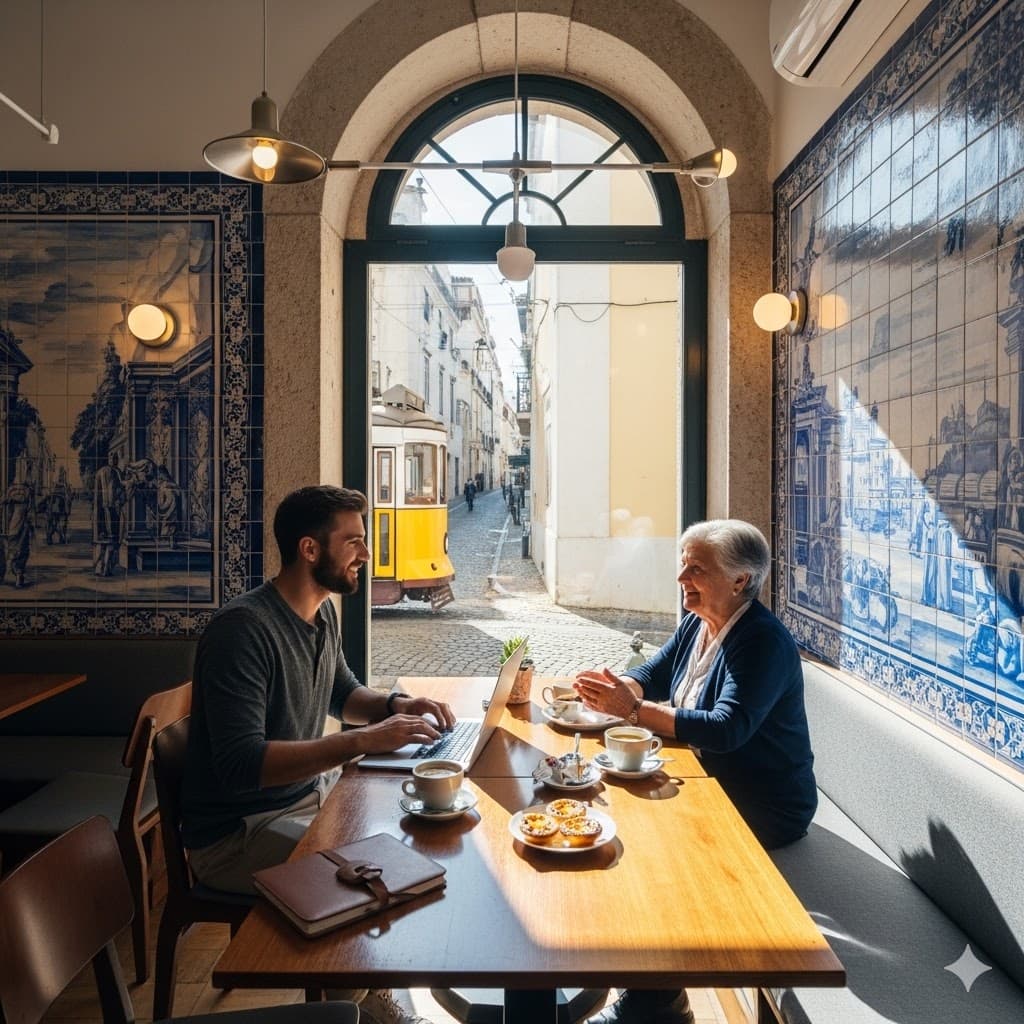
  • A Lisbon café lined with blue azulejo tiles, where a younger man with a laptop and an older woman talk across a table as a yellow tram passes the doorway
    Lisbon

    Case Study B

    The Layered Cafe

    A tiled café where four separate historical periods are in use simultaneously, none of them as decoration.

    Azulejo tiles from one century, a coffee machine from another, a laptop economy on the tables by the window, and a card game at the back that has evidently outlasted all three. Massey would refuse to call any single layer the real one. The café is a process; on that afternoon we happened to be standing inside it.

    Places as Processes

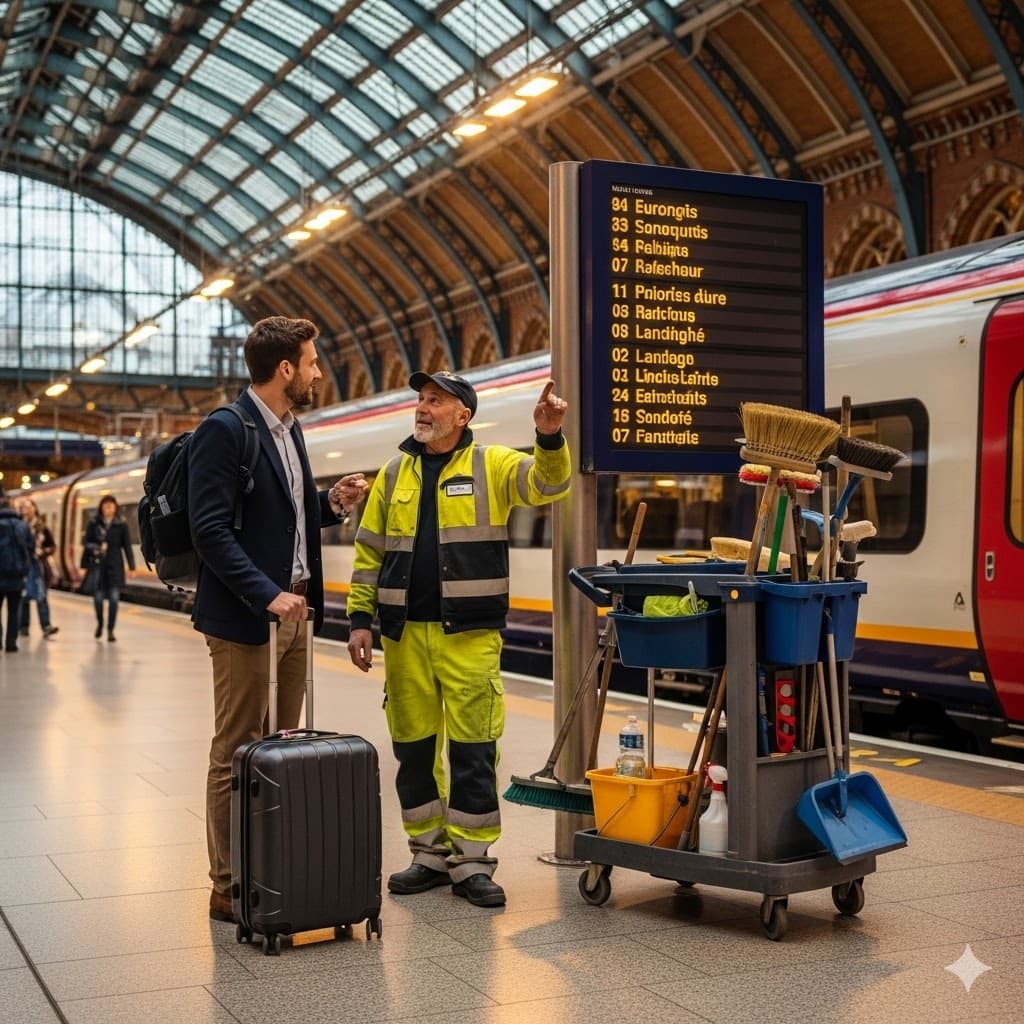
  • A traveller with a suitcase talking to a cleaner beside his cart on a St. Pancras platform, departure board and train alongside
    London

    Case Study C

    The Power-Geometry of the Platform

    St. Pancras, where one building sorts people into those departing for another country and those who will be here at closing.

    The concourse is a monument to frictionless movement — for some. The man cleaning the platform edge had the most detailed knowledge of that station of anyone in it, and the least access to what it was built to do. Same locale, same hour, two entirely different geographies. This is power-geometry with a timetable attached.

    Power-Geometry

Further Reading

Selected work

  • Space, Place and Gender1994Polity Press
  • For Space2005SAGE
  • World City2007Polity Press

SGTN scholar features are editorial tributes. They summarise and apply published work by Doreen Massey; they are not authored or endorsed by the scholar.

Your Turn

Every Framework Started as Somebody’s Field Note.

Record one encounter in 100–300 words and send it to the network. The scholarship on this page exists because people paid attention and wrote it down.